
The Mount Papandayan hike is the one to do if you want a real volcano, steaming craters and a dead forest, without a 2am summit push or serious fitness. Most people walk from the Camp David trailhead to the crater field, the Hutan Mati (Dead Forest) and the Tegal Alun edelweiss meadow, then either camp or come back down the same day.
It’s not hard, but it’s not a stroll either. The fee for foreigners is a lot higher than for locals, weekends are packed, and the weather above 2,000 m can switch from sunburn to cold rain in an hour.
Last checked: November 2026. Prices and schedules change, so confirm before you go.
Quick facts
| Location | Cisurupan district, Garut regency, West Java |
| Managed as | TWA Gunung Papandayan (Taman Wisata Alam, a nature tourism park) |
| Highest point | about 2,665 m (most hikers don’t go to the true summit) |
| Trailhead | Camp David, about 2,000 m |
| Main camp | Pondok Saladah, about 2,290 m |
| Time to Pondok Saladah | roughly 3–5 hours at an easy pace |
| Foreigner entry | around IDR 200,000 weekdays, IDR 300,000 weekends/holidays (2026) |
| Domestic entry | around IDR 20,000 weekdays, IDR 30,000–37,500 weekends |
| Difficulty | Easy to moderate; beginner-friendly |
Getting to the trailhead from Garut
Camp David is at the end of a steep road above Cisurupan, roughly 1.5 hours by car from Garut town.
By car or rented driver: The simplest option. The road gets steep and twisty near the top, which is fine in a normal car with a driver who knows it. If you’re coming from Bandung, allow for the Nagreg pass traffic, which adds hours on weekends. Our Garut travel guide is a good place to start planning.
By public transport: It works, but it’s slow.
- Take an angkot (shared minivan) from Terminal Guntur in Garut towards Cisurupan. Ask for “pertigaan Cisurupan” (the Cisurupan junction). Local accounts say the ones heading that way are usually green, but check with the driver.
- At the junction, hire an open pick-up truck or ojek up to Camp David. The ride is about an hour. Agree on the price first, and expect to wait until a group fills a pick-up unless you pay for the whole thing.
By ojek (motorbike taxi): Ojeks also wait inside the park. A May 2025 report put the ojek fare at around IDR 20,000 to Pos VII and around IDR 150,000 to the Pondok Saladah camp. Useful if your knees give up on the way down.
Entry fees
Papandayan uses two-tier pricing, which is standard for Indonesian nature parks. As a foreigner, you’ll pay roughly ten times the local rate.
- Foreign visitors: around IDR 200,000 on weekdays and IDR 300,000 on weekends and public holidays.
- Domestic visitors: around IDR 20,000 on weekdays and IDR 30,000–37,500 on weekends, depending on source.
- Camping: charged on top. Older 2022 figures were IDR 35,000 per person (and IDR 105,000 for foreign campers); more recent listings show around IDR 60,000–72,500. Treat this as unconfirmed and ask at the gate.
- Vehicles: extra, from about IDR 12,000 for a motorbike up to IDR 110,000+ for a bus. Cars are usually somewhere in the IDR 25,000–35,000 range on weekends.
Fees are set by the park operator and change, sometimes without much notice. Bring cash. Card and QRIS payment may be available, but signal is patchy up there.
If you have a KITAS (Indonesian residence permit), ask whether resident rates apply. Don’t count on it.
The route: Camp David to Tegal Alun
The main trail from Camp David is the Cisurupan route. There’s also a route from the Pangalengan side, but it’s far less used. Here’s how the Cisurupan route flows.
1. Camp David to the crater field (about 1 hour)
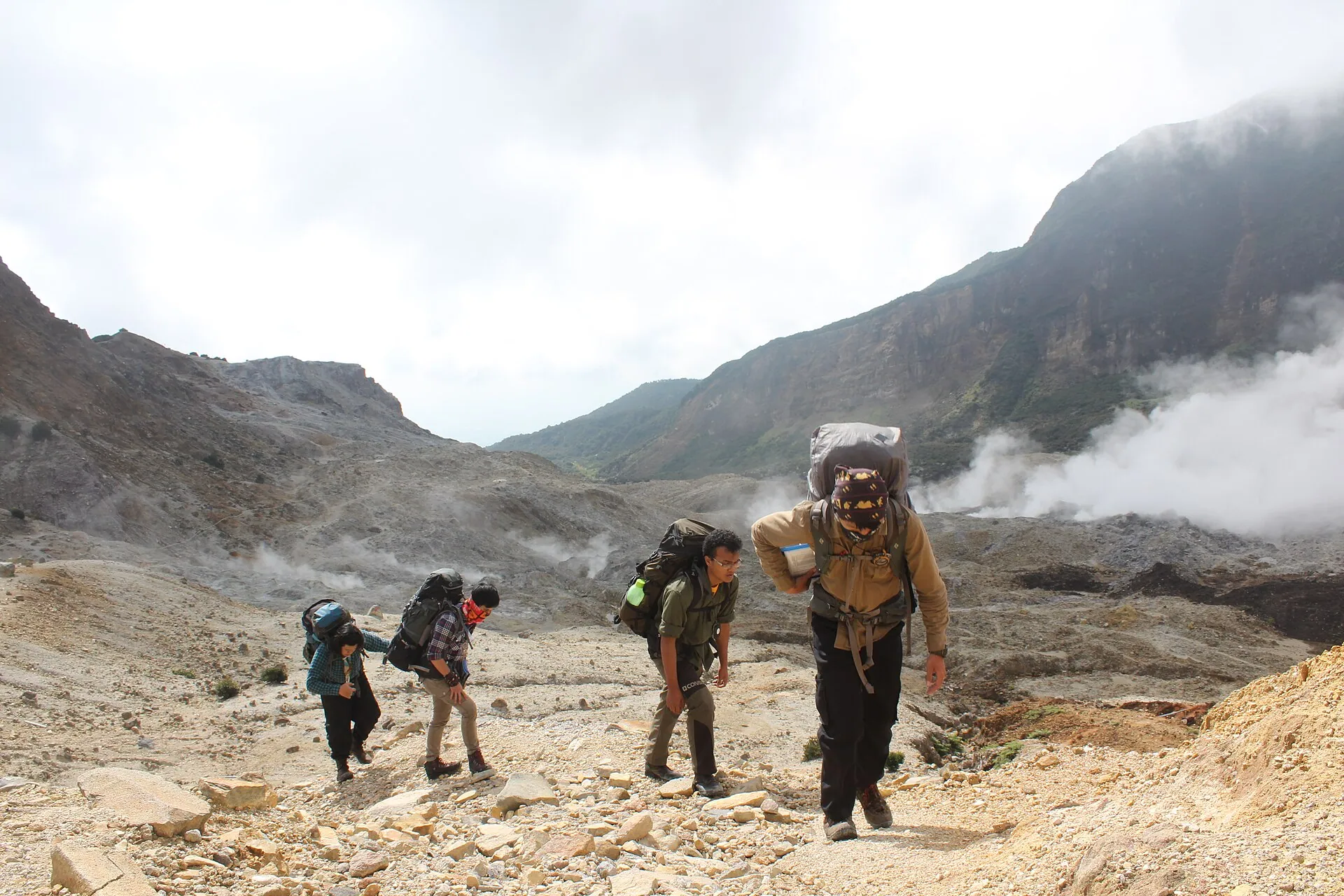
You start walking almost straight into the crater area. The trail is rocky, grey and open, with steam vents hissing on both sides. You’ll pass Kawah Emas (Golden Crater) and other active vents.
The sulphur smell is strong. Many people walk this stretch with a buff or mask over their nose. If you have asthma, take it slowly and don’t linger at the vents.
2. Crater field to Ghober Hoet and Pondok Saladah (2–4 hours)
After the craters, the trail climbs into scrub and forest, passing the Ghober Hoet camp area before reaching Pondok Saladah. This is a big, flat meadow at about 2,290 m with a water source, and food stalls on busy days.
Hiker estimates for Camp David to Pondok Saladah range from about 3 to 5 hours. Fitter walkers do it in less. The 3–5 hours figure includes photo stops, which you will make.
3. Hutan Mati, the Dead Forest (15–20 minutes from camp)
The 2002 eruption killed a stand of trees and left their white, bare trunks standing on pale ash. It’s the shot everyone comes for. It’s also the best sunrise spot if you camp. Go early, before the day-trippers arrive.
4. Tegal Alun, the edelweiss meadow (about 30–60 minutes beyond)
A short, steep climb above Hutan Mati takes you to Tegal Alun, a high plateau covered in Javanese edelweiss. The plant is protected, so look but don’t pick.
Do you need to go to the summit?
Not really. Most visitors treat Tegal Alun as the high point of the day. If you want to push on to the true summit, ask the rangers about trail conditions first.
Day hike or overnight?
Day hike: Very doable. Hikers report starting at Camp David around 9am and finishing around 4pm with time at Hutan Mati and Tegal Alun. Start earlier if you can. Clouds and rain usually roll in after lunch.
Overnight at Pondok Saladah: Better for sunrise and fewer crowds at the Dead Forest. Porters are available (one listing puts a return porter at around IDR 300,000–350,000), and local operators rent out camping gear. It gets properly cold at night, so bring a real sleeping bag.
Weekend nights in the dry season can mean hundreds or even thousands of campers. News reports from recent holidays mention around 2,000 visitors a day. If you want quiet, go midweek.
Best time to go
- Dry season (roughly May to September): Clearer mornings, firmer trails, colder nights. The best time to hike.
- Rainy season (roughly November to March): Afternoon storms, slippery ash and mud, more cloud. Still doable if you start at dawn.
- Avoid: Indonesian long weekends, Lebaran, and Christmas–New Year week if you dislike crowds.
Papandayan is an active volcano. Before you go, check the alert level on Indonesia’s volcano monitoring agency (PVMBG), via the MAGMA Indonesia app or site. Trails have also closed in the past during dry-season forest fires, as happened in 2023.
What to wear and pack
- Shoes: Proper hiking shoes or trail runners with grip. Loose volcanic gravel on the way down is where people slip.
- Layers: T-shirt for the climb, fleece and waterproof jacket for the top. Temperatures drop fast once the cloud comes in.
- Mask or buff: For the sulphur near the craters.
- Water and snacks: At least 1.5–2 litres for a day hike. Stalls exist at Pondok Saladah but not always.
- Cash: For entry fees, ojeks, food and toilets. Small notes.
- Headtorch: Essential if you’re camping or starting before dawn.
- Rubbish bag: Pack out everything you bring. Litter on Garut’s mountains is a long-running problem and local campaigns push hard against it.
For more practical advice, see our Travel Tips section.
Guides: do you need one?
The main trail is wide, busy and well-trodden, so a guide isn’t required for a day hike in good weather. A local guide helps if you don’t speak Indonesian, want to camp without bringing gear, or are coming in the rainy season. Several tour platforms sell guided day trips from Bandung and Garut that include transport and entry fees, which removes most of the logistics.
Combining Papandayan with the rest of Garut
Papandayan pairs well with a night in the Cipanas hot spring area near Garut town. Soaking your legs after the walk down is about the best thing you can do for them. For more ideas, browse our destination guides or our reviews.
FAQ
How long is the Mount Papandayan hike?
Most hikers take 3–5 hours from Camp David to Pondok Saladah. A day trip including Hutan Mati and Tegal Alun usually takes 6–8 hours return.
How much is the Papandayan entry fee for foreigners?
Around IDR 200,000 on weekdays and IDR 300,000 on weekends and holidays (2026). Camping and vehicles cost extra. Confirm at the gate, as rates change.
Is Papandayan good for beginners?
Yes. It’s one of the most beginner-friendly volcano hikes in Java. You need average fitness, decent shoes and a rain jacket, not technical skills.
Can I hike Papandayan without camping?
Yes. Start early (by 8–9am) and you can see the craters, Dead Forest and Tegal Alun and be back at Camp David by late afternoon.
Is Papandayan safe to visit?
Generally, yes, but it’s an active volcano. Check the PVMBG alert level, stay on marked trails, keep away from vents, and come down early if storms build.
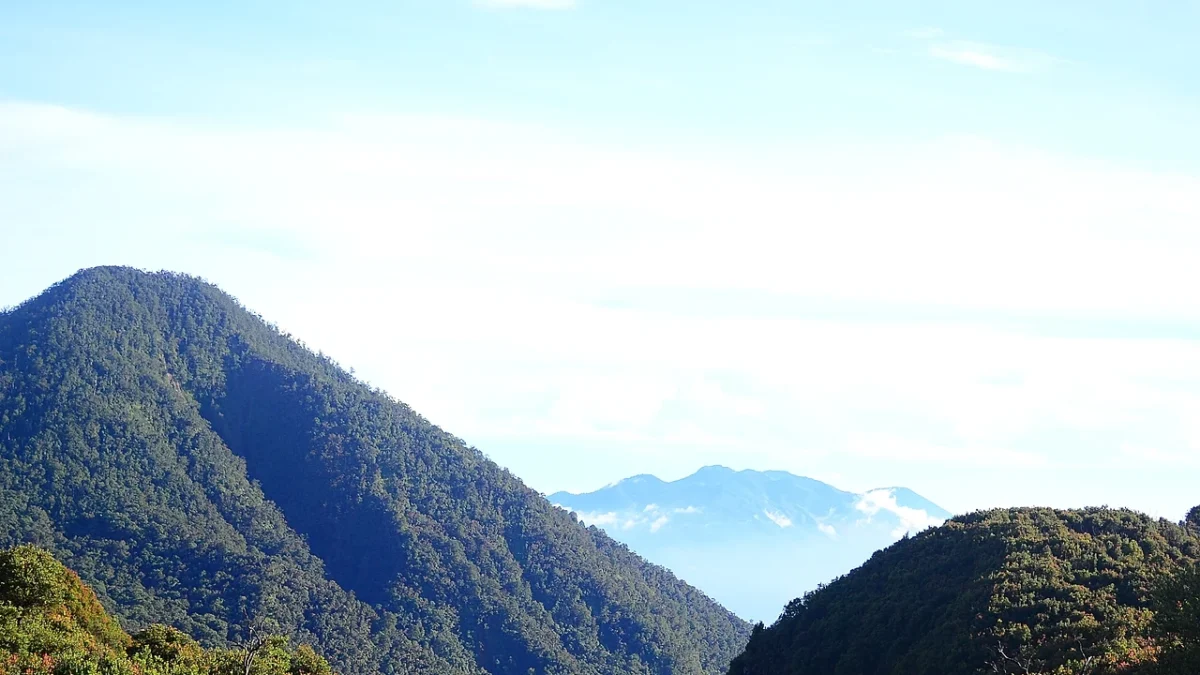
Featured photo: the view from Mount Papandayan, by Eko Raharjo, via Wikimedia Commons, licensed under CC BY-SA 4.0.