
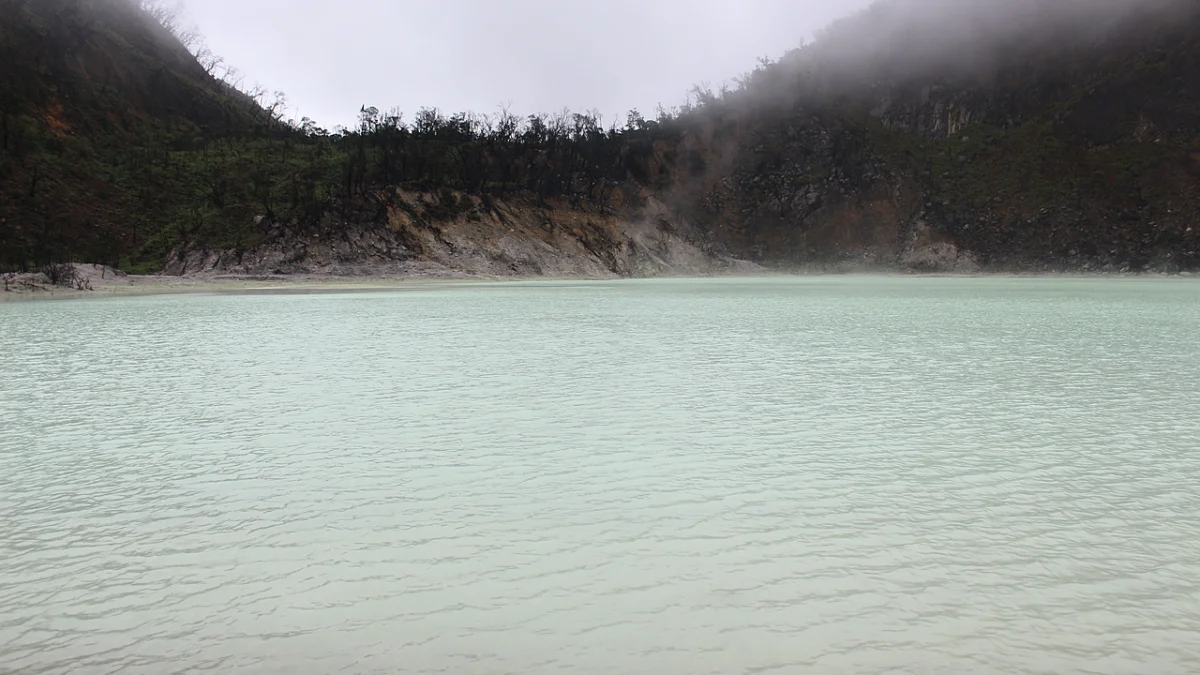
Kawah Putih (“white crater”) is a sulphur lake inside an old volcanic crater on Mount Patuha, about 45–50 km south of Bandung near the town of Ciwidey. The water shifts between pale turquoise, milky green and grey depending on the light, and on a clear morning it really does look edited.
The visit itself is short. What takes planning is getting there before the fog and the weekend traffic do. Here’s how tickets work, how to get up from Bandung and when to go.
Last checked: November 2026. Prices and schedules change, so confirm before you go.
Kawah Putih quick facts
| Location | Rancabali, Ciwidey area, Bandung regency, West Java |
| Altitude | roughly 2,400 m |
| Distance from Bandung | about 44–50 km |
| Drive time | about 1.5–2.5 hours, much longer on weekends |
| Opening hours | daily, roughly 7:00/7:30am to 4:30/5pm |
| Foreigner ticket | around IDR 75,000–81,000 (2026) |
| Domestic ticket | around IDR 25,000–30,000 |
| Ontang-anting shuttle | around IDR 29,000–30,000 |
| Time needed at the crater | 30–60 minutes |
| Temperature | often 8–22°C, frequently misty |
Tickets and fees
There are three separate costs to know about, and they’re where most of the confusion comes from.
1. Entry ticket
As with most Indonesian attractions, foreigners pay more. Recent sources put the foreign visitor ticket at around IDR 75,000–81,000 and the domestic ticket at around IDR 25,000–30,000. Older figures of IDR 50,000 for foreigners are still floating around online. Ignore them.
2. The ontang-anting shuttle
The crater is about 5 km uphill from the main gate and car park. Most visitors ride the ontang-anting, an open-sided shuttle (basically a converted angkot or jeep) that runs up and down through the forest. A ticket is around IDR 29,000–30,000. Some ticket windows sell a combined entry-plus-shuttle ticket for domestic visitors; ask whether there’s an equivalent for foreigners.
Shuttles leave frequently on busy days, as soon as they fill up.
3. Driving your own car to the top
You can usually drive a private car up to the upper car park near the crater, but it’s expensive. Recent figures are around IDR 150,000–162,000 per car on top of the entry tickets. For two people, the shuttle is cheaper. For a family of five with a driver, driving up can make sense and saves waiting in the shuttle queue.
Bring cash. Some counters take QRIS (Indonesia’s QR payment), but foreign cards and apps don’t always work with it, and mobile signal can drop.
Getting to Kawah Putih from Bandung
By car with driver
The easiest option, and the one most visitors choose. The route heads south through Soreang, then climbs through Ciwidey and the tea plantations to Rancabali. The Soreang–Pasirkoja (Soroja) toll road cuts out some of the city traffic.
Estimates range from about 1.5 hours via the toll road in light traffic to over 2 hours in normal conditions. On a Saturday or long weekend, the Ciwidey road can jam badly, so plan for 3+ hours.
A car with driver lets you combine Kawah Putih with other Ciwidey stops in a day. Ask whether your quote includes fuel, tolls, parking and the upper car-park fee.
By Grab or Gojek
You can get a ride-hailing car there from Bandung. The problem is getting back. Drivers are scarce in Rancabali and some won’t accept the long return trip. If you go this way, arrange a return driver or a round-trip booking in advance.
By public transport
It’s possible but slow. From Terminal Leuwi Panjang in south Bandung, take a bus or elf towards Ciwidey. From Ciwidey town, catch an angkot (shared minivan) heading up to the Kawah Putih gate.
Fares are low but we couldn’t confirm current amounts. The figures in older travel blogs are years out of date. Ask the driver before you board, and allow 3–4 hours each way. Start early, because services thin out in the afternoon and you don’t want to be stuck at the gate after closing.
On a tour
Plenty of day tours from Bandung bundle Kawah Putih with Situ Patenggang lake and the tea plantations. Worth it if you don’t want to deal with transport, especially if you’re short on time.
Best time to go
Time of day: As early as possible. Arrive close to opening, around 7:00–7:30am. Mornings are more likely to be clear, and fog and cloud often roll in by late morning or early afternoon. A crater full of mist is atmospheric, but you won’t see the lake’s colour.
Day of week: Weekdays. Kawah Putih is one of the most popular day trips from Bandung and Jakarta, and weekends bring long shuttle queues and traffic on the road up. Public holidays and Lebaran are the worst.
Season: The dry season (roughly May to September) gives the best odds of clear mornings. In the rainy season (roughly November to March), afternoons are often wet. Go early and you’ll still have a decent chance.
The lake’s colour also changes with weather, sun angle and sulphur levels. Don’t be surprised if it looks greyer than in photos.
At the crater: what to expect
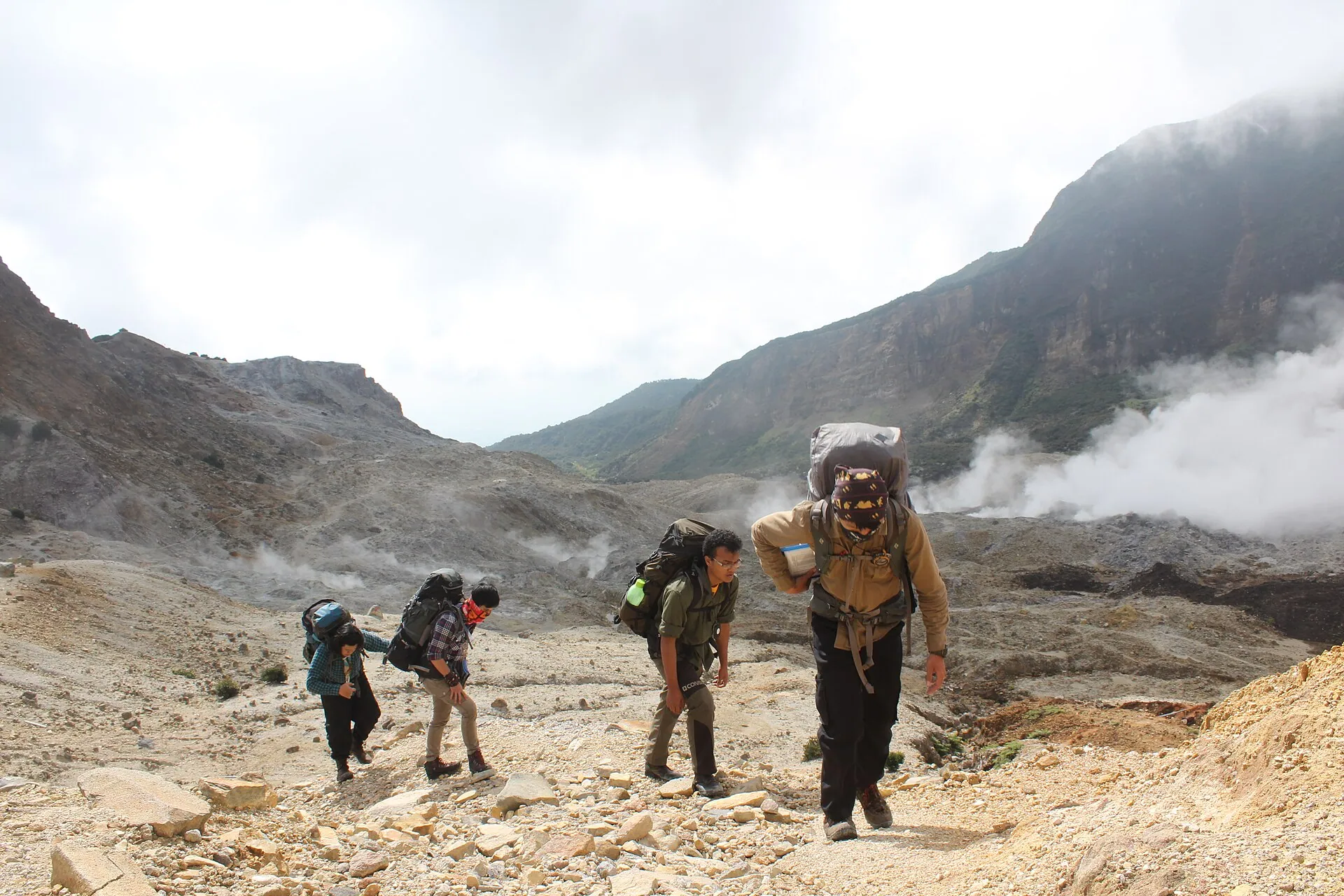
- Sulphur smell: Strong. Kawah Putih was once a sulphur mine. Masks are sold or handed out near the crater, and you should wear one.
- How long to stay: 30–60 minutes is plenty. Lingering longer without a mask isn’t a good idea, especially for kids, older visitors or anyone with asthma or heart problems.
- No swimming: The water is highly acidic (pH reported around 0.5–1.3). Don’t touch it with bare skin, and keep kids back from the edge.
- Boardwalks and viewpoints: There’s a wooden walkway along part of the shore. It can be slippery when wet.
- Rules: Camping, rock climbing and littering are banned inside the crater area.
If you want a different angle, some visitors walk up to nearby viewpoints such as Puncak Sunan Ibu above the crater, particularly for sunrise. Check with staff at the gate whether it’s open and whether a guide is needed.
What to wear and bring
- Warm layers: At 2,400 m it’s much colder than Bandung. A fleece or light jacket and something waterproof.
- Closed shoes: Paths are damp and the ground near the water is soft.
- Mask: A proper mask if you have one; the cloth ones sold at stalls help a bit.
- Cash in small notes: For tickets, the shuttle, parking, toilets and snacks.
- Sunglasses: The white rock and pale water reflect a lot of light on clear days.
For more practical advice, see our Travel Tips section.
What else to see around Ciwidey
Kawah Putih is the headline, but the Ciwidey–Rancabali area has plenty nearby, so it’s worth making a day of it:
- Situ Patenggang: A lake surrounded by tea plantations, a short drive further along the road.
- Tea plantations: The road between Ciwidey and Rancabali runs through them. Pull over and walk in for photos.
- Ranca Upas: A campsite with a deer enclosure, popular with families.
- Hot springs: Several hot spring pools in the area are perfect after the cold at the crater.
Browse our destination guides for more around West Java, or head east from Bandung with our Garut travel guide.
FAQ
How much is the Kawah Putih ticket for foreigners?
Around IDR 75,000–81,000 for entry in 2026, plus around IDR 29,000–30,000 for the ontang-anting shuttle to the crater. Driving your own car to the top costs extra. Confirm at the gate, because prices change.
What time does Kawah Putih open?
Daily, from around 7:00–7:30am until 4:30–5pm, depending on the source. Get there at opening for the best chance of clear views and smaller crowds.
How long does it take to get to Kawah Putih from Bandung?
About 1.5–2.5 hours by car on a weekday. Weekends and holidays can push that past 3 hours. Public transport takes 3–4 hours each way.
Is Kawah Putih safe to visit?
Yes, for a short visit. Wear a mask near the water, keep your visit to around an hour, don’t touch the acidic water, and take extra care if you have breathing problems.
Is Kawah Putih worth it if it’s foggy?
It depends on the fog. Thin mist can make it eerie and beautiful; thick cloud hides the lake completely. If you can, stay flexible and go early on the clearest-looking morning of your trip.
Featured photo: Kawah Putih, Ciwidey, by Abdurrozaqf, via Wikimedia Commons, licensed under CC BY-SA 4.0.